The battle for context runs through browsers
Yesterday, around 8 p.m. Paris time, OpenAI unveiled its web browser, with ChatGPT built in.

Antoine HeftlerCo-founder
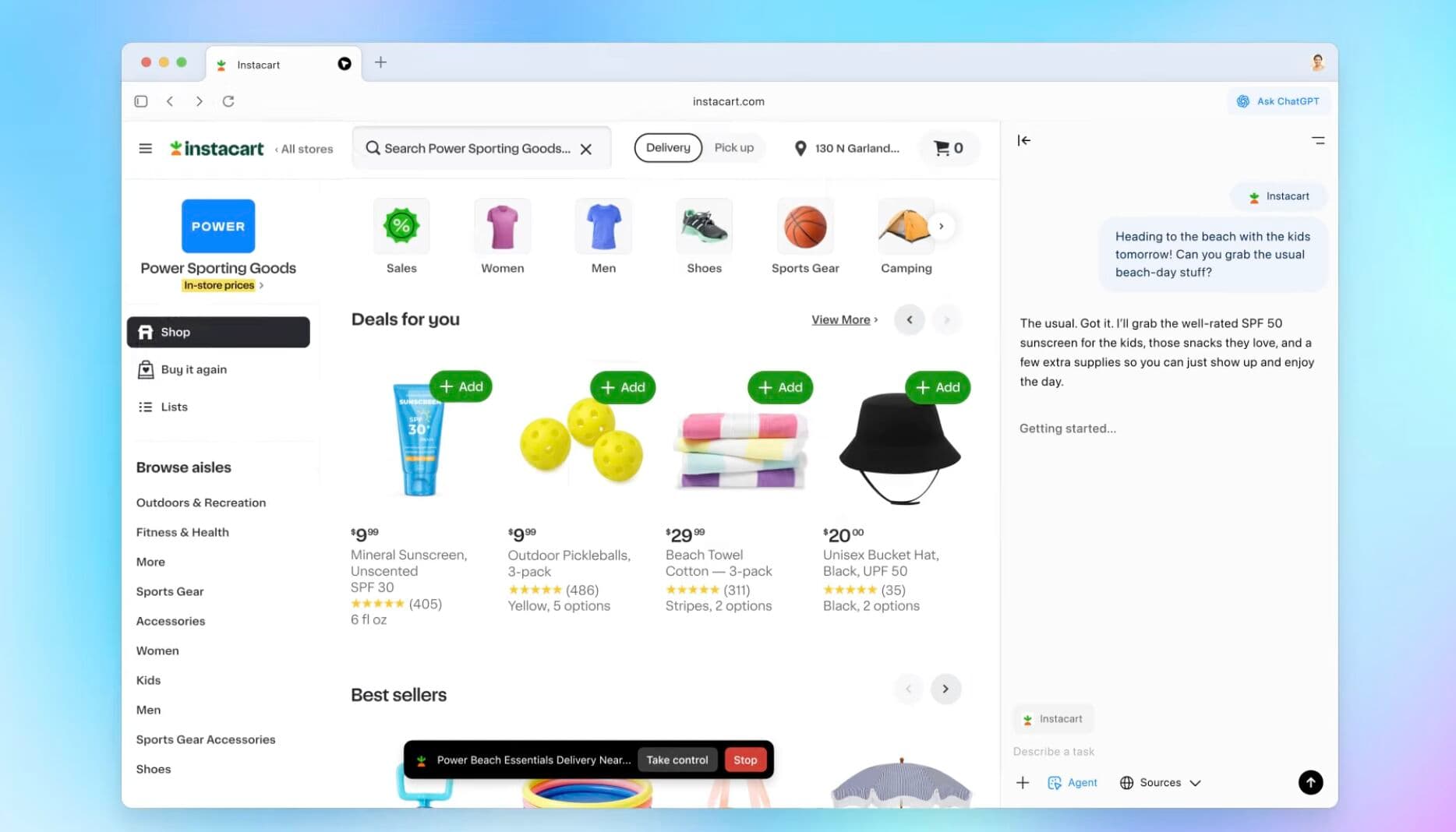
Yesterday, around 8 p.m. Paris time, OpenAI unveiled its web browser, with ChatGPT as conductor. A new stage in the battle for context. Here is the full picture.
Built on a Chromium engine, this new browser lets you interact with ChatGPT alongside any page you are viewing, while remembering every action taken in the past. The features are striking. ⛷️ Want to buy what you need for a Christmas ski trip? Open the Décathlon site and ask ChatGPT to put everything you need in the cart, which you will check out at the end. 💡 You read an interesting article a few days ago and cannot remember where? Ask GPT, without painfully scrolling back through your history. 📩 Want to improve the style of your latest email? Select the text and ask GPT to rewrite it in the same window. Magic.
But the fundamental point — THE reason OpenAI is hunting on Chrome's ground — is to capture more contextual data, so it can answer every question of yours with precision.
Taking context into account is, and this cannot be repeated often enough, AI's Achilles heel. Today's browsers, which more or less let you do everything online (except, of course, highly technical needs), are therefore the perfect vehicle for capturing the data required to structure precise, individualized answers. That is, in fact, the main message from Fidji Simo, the French executive who leads OpenAI's applications. In a LinkedIn post last night, she said that "this new browser can, if you wish, remember what you have done on the web and use that context for your future questions."
It is also an extraordinarily effective way to speed up the integration of GPT into closed operating systems such as Apple's, as Mathieu Crucq notes in his latest post.