AI models respond to user context more than ever (Yext study)
The study Yext published this week, covering 6.8 million AI answers, illustrates once again a point that marketing and communications teams cannot ignore: AI models respond to user context more than ever.

Antoine HeftlerCo-founder
The study Yext published this week, covering 6.8 million AI answers, illustrates once again a point that marketing and communications teams cannot ignore: AI models respond to user context more than ever. 👉 In plain terms: the same brand can appear or disappear depending on WHO is speaking, from where, and why.
1️⃣ Local context determines visibility AI models take the user's location into account and radically change the nature of the sources they cite. According to Yext, results differ significantly from one state, city, or ZIP code to another — even when the query is identical.
➡️ A national brand can therefore be absent from an AI answer in a given area, simply for lack of a sufficient local signal. Your content strategy has to be run at local scale, even if your product or service does not vary along that axis.
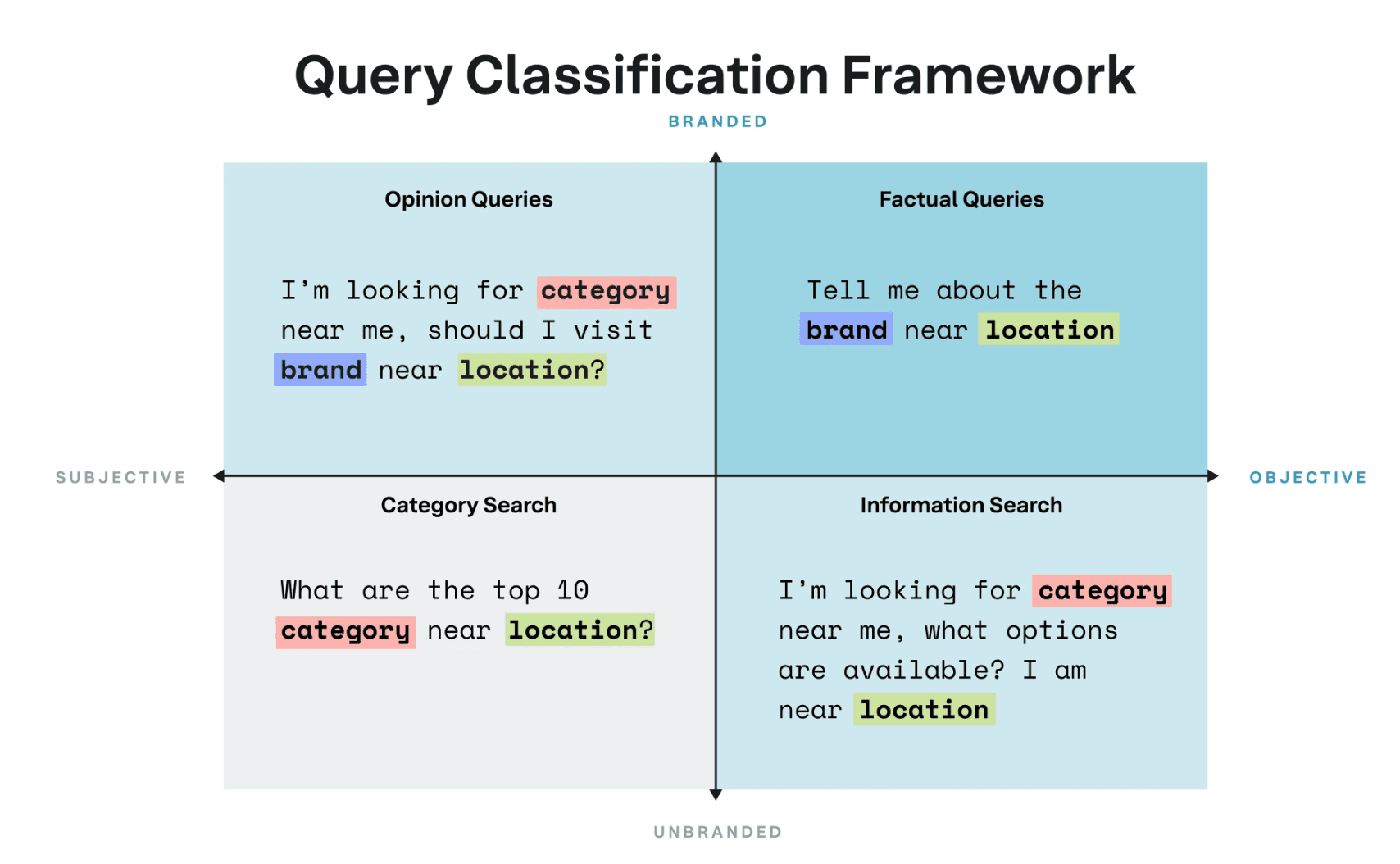
2️⃣ Query intent steers the sources that get mobilized For factual or transactional queries, proprietary sites dominate citations by a wide margin, whereas for subjective or opinion queries, AI systems favor directories and specialist listings. The distinction is crucial: your brand can be perceived as an authority on factual topics and still be entirely invisible on evaluation queries, if your content or reviews are not properly structured in third-party ecosystems.
➡️ Mapping the sources cited by AI therefore becomes an essential step in steering your visibility inside generated answers — and, tomorrow, inside the purchase journeys that will be built into conversational engines.
3️⃣ The persona has to include the variable of conversational context Citation performance also varies with the wording and structure of the query. Tone, length, and the level of precision in the question change the results. That confirms that AI does not answer only a user profile. It answers a linguistic situation: how the question is asked, in what register, and with what intent.
➡️ That means enriching traditional personas with new variables, such as the level of informational maturity (discovery, comparison, decision) or the typical register of expression (rational, emotional, prescriptive). The full study is available here: https://www.yext.com/research/article/ai-citations-user-locations-query-context#conclusion