
Marc
Professional-distribution buyer
Looks for a reliable supplier. Decides on lead times and consistent quality.
what an analysis contains
Scope, method and reading of a GEO and APO analysis, walked through on a typical case. The figures and the deliverable structure are those of real analyses.
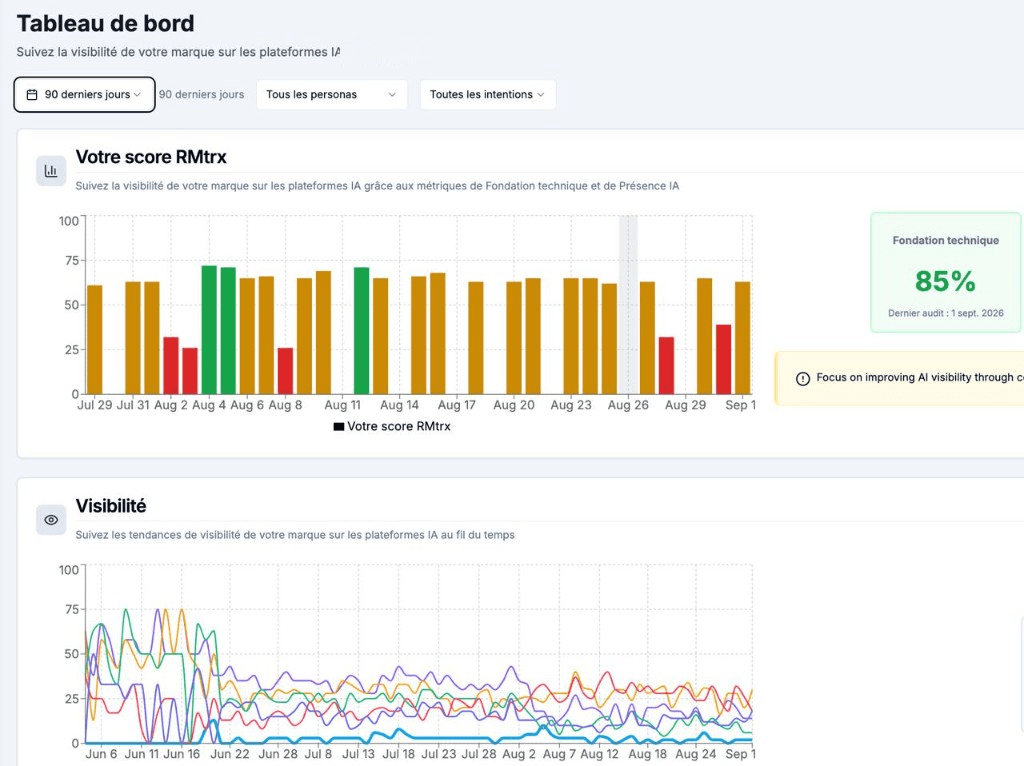
the context
Vernaz equips architecture and commercial buildings. The company does not exist: it concentrates what we see on B2B brands mid website rebuild. The brief: what engines answer when the brand is not named.
The figures and the deliverable structure are those of real analyses. Only the name Vernaz and the lighting setting are invented, so the case can be told without exposing a client.
the input
Framing starts from three personas, from what you know of your market. They determine the questions.
Professional-distribution buyer
Looks for a reliable supplier. Decides on lead times and consistent quality.

Specifying architect
Looks for a technical answer. Decides on compliance and performance.

Electrical installer
Looks for operational material. Decides on ease of install and available advice.
They determine the questions asked to ChatGPT, Claude, Gemini and Perplexity, from exploration to decision. A standard case runs to hundreds of questions: what matters is who is asking.
the method
The analysis does not produce a score. Answers first (GEO). Pages next, when the catalogue matters (APO) — an optional track.
We do not query engines with the brand name. We ask what Marc, Léa and Karim would type: a supplier, a technical reference, an install constraint. That is the only way to see whether Vernaz emerges when nothing points to it.
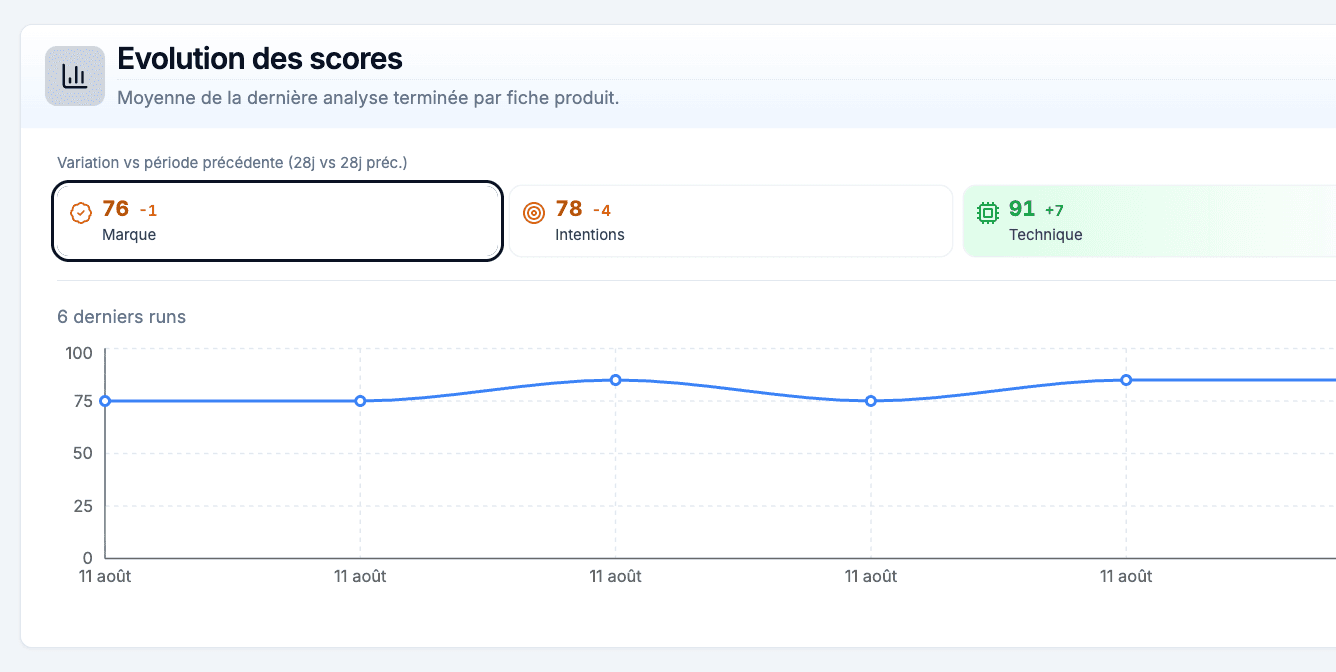
When Vernaz is named, engines know it. That is not enough. We read four levers: whether it appears, in which words, on which sources, and whether an agent can actually read the site.
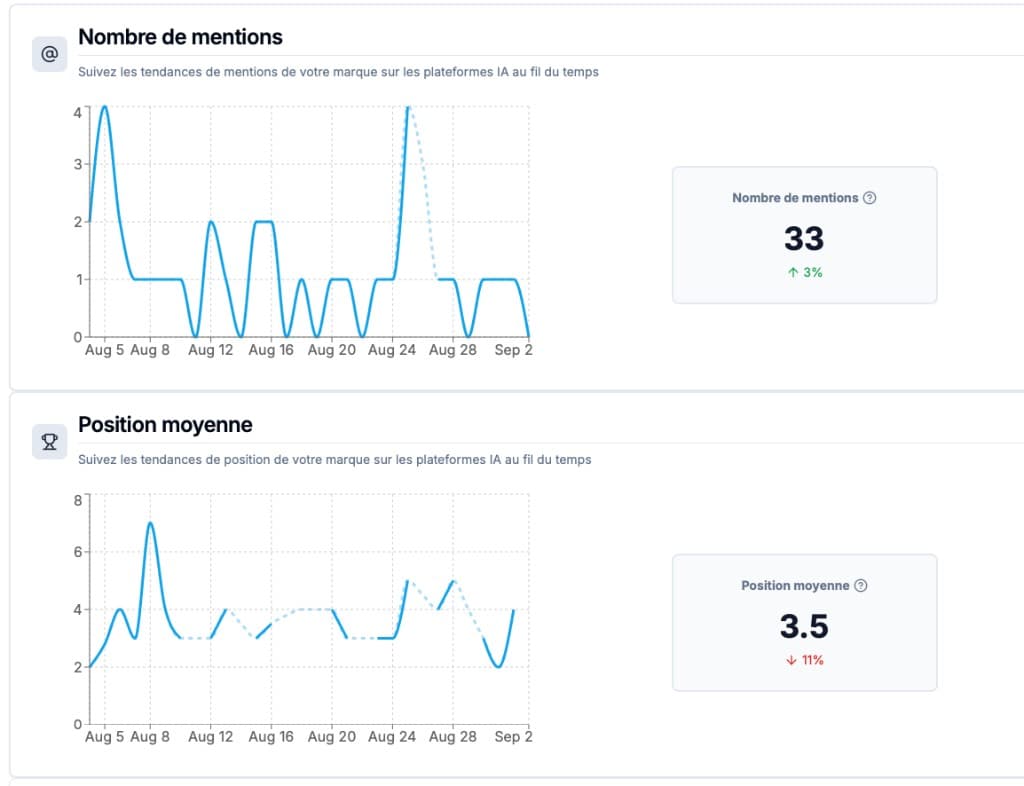
The share of answers where the brand appears, on questions that do not name it. Named: known and well perceived. Unnamed: absent — where Marc, Léa and Karim decide.
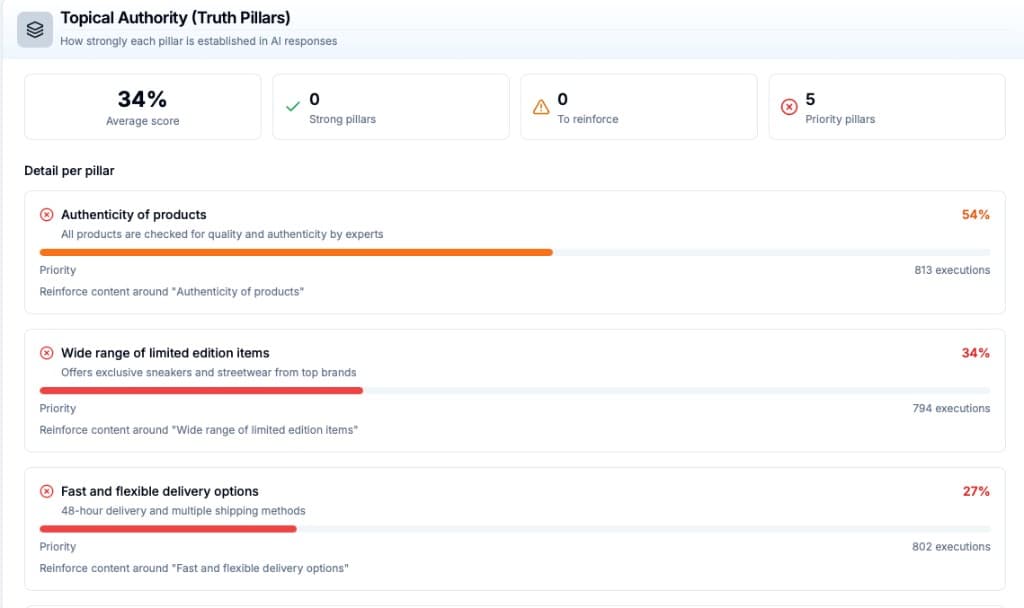
The gap between the vocabulary Vernaz claims and the words engines use to describe it. Here, seven times out of ten, neither words nor messages are reused.
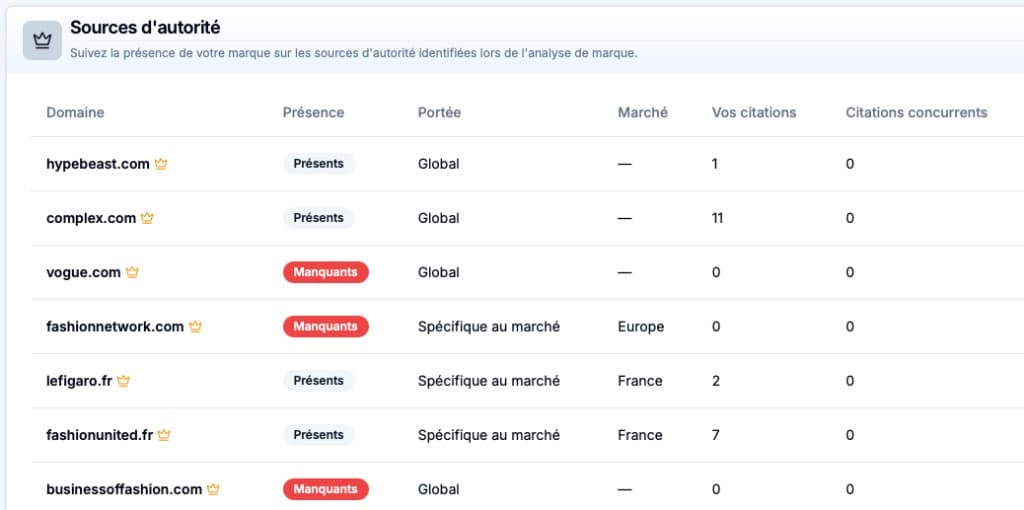
Authority domains in the sector where the brand is cited — or missing. Six sources acquired out of fifteen identified: engines rely elsewhere.
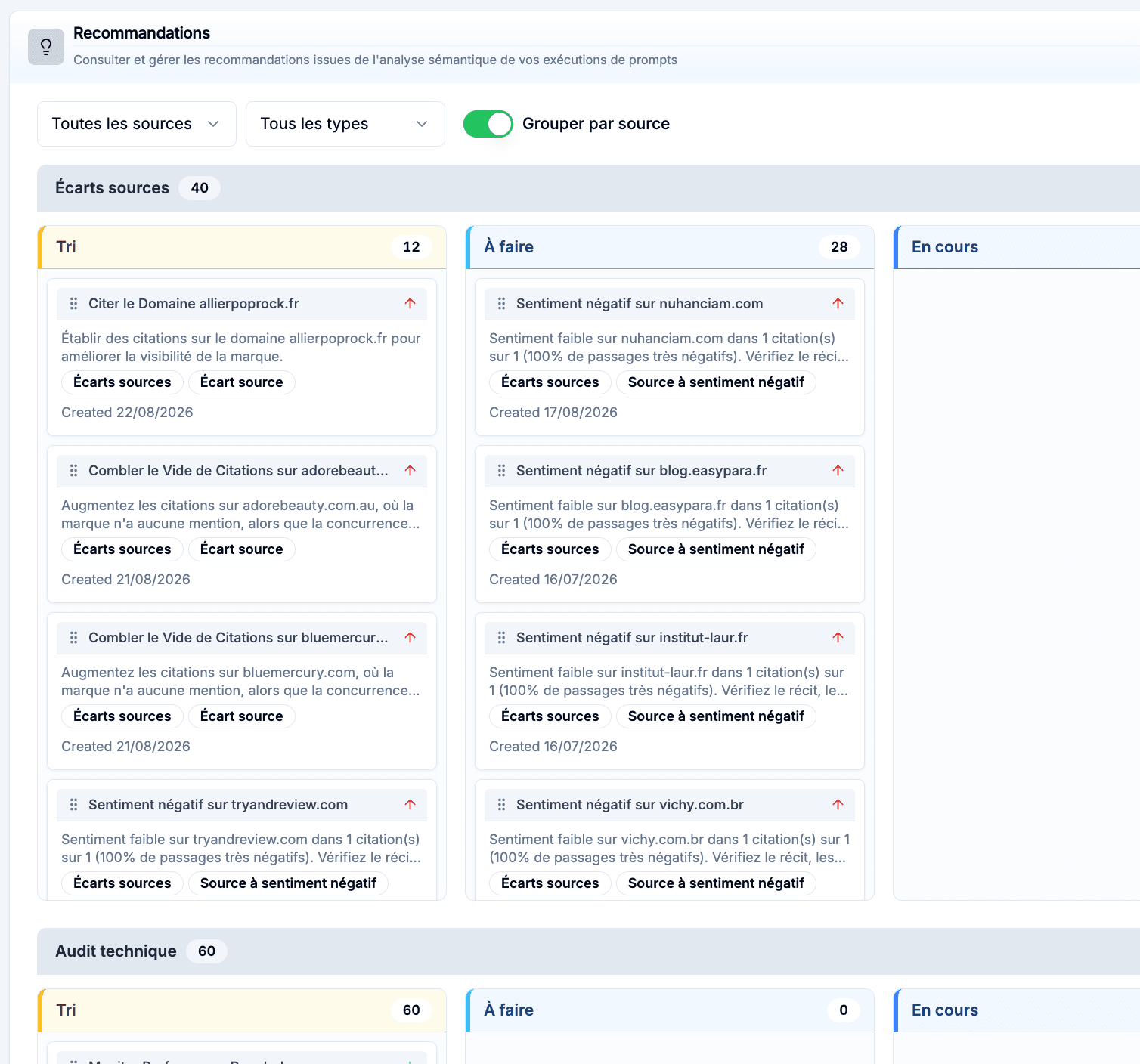
Structure, markup, templates: what an agent can actually read. If every product page fails the same way, it is not 142 rewrites: it is one template to fix.
When the site sells through a catalogue, we read product and collection pages: can an agent extract the page, does it speak the brand, does it answer Marc, Léa or Karim? On this case the track is not required.
This track is called Agentic Product Optimization.
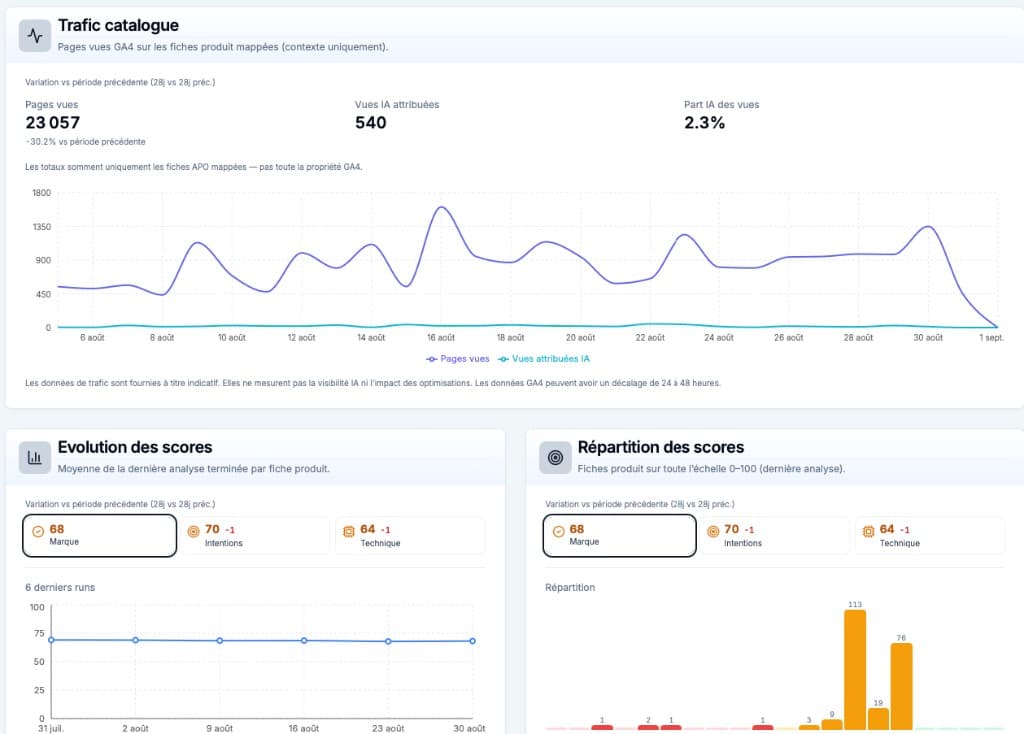
Presence, semantics, sources and technical fit are not read in isolation: they are crossed by persona, engine and competitor. Then the same scope is run again. What moved is not an impression: it is a remeasurement.
the deliverable
Named: well perceived. Unnamed: absent for Marc, Léa and Karim. Reputation is not what blocks conquest: presence is, and the lack of proof where they decide.
Presence first: Vernaz does not emerge when nothing points to it. Semantics and sources explain why. Technical analysis says whether the site can follow. Three or four gaps, in order, ready to take into a meeting.
Access and template before any writing — until the agent can read, copy produces no measurable effect. One model fix, not 142 product pages. Then the comparative and operational proof Marc, Léa and Karim already find with competitors.
Same personas, same engines, same grain. Next quarter, the debate is not an impression: it is what moved.

Brand fit: one axis of the composite score measured by ResonanceMetrics.
next
This page shows the structure of an analysis, not its content. Content only exists relative to a specific brand, market and competitors. We can show you that on yours.