Agentic commerce: before AI buys from you, it has to know you
Before an AI agent buys from your store, it has to know it. Run five tests to see whether assistants cite your shop and can read your product pages.

David RauxCo-founder
In brief
Published on November 27, 2026 · sources consulted on November 23, 2026
Before an AI agent buys from you, it has to know your store, then pick it. The first step in agentic commerce is being discoverable: assistants need to know that you exist and what you sell.
Grok Bot already compares stores against each other. On November 13, 2026, this SpaceXSI (formerly xAI) agent got a new rule. When payment fails several times on a site the user did not choose, the agent moves to another store and asks for approval before paying. Its Deal Watcher model now compares the price at other stores before paying (Grok Bot changelog). Nowhere does the changelog say that the merchant who gets dropped is told.
The same day, Amazon launched Alexa pour vos Achats in France. On Amazon.fr, the assistant compares products, tracks prices, and manages the cart (About Amazon France, November 13, 2026). Google has offered AI Mode in France since July 22, 2026 (Google France). In the United States, its Universal Cart has offered checkout through UCP since October 15 (Google, October 15, 2026). That checkout reached Canada on November 4, and the Canadian post announces a simplified integration in Merchant Center “starting next year”, without naming countries (Google Canada, November 4, 2026).
Our overview of agentic commerce describes, assistant by assistant, what you can buy in the United States and in France. This last part of the series turns it into five tests you can run yourself on two product pages, a best-seller and a product with variants. The first checks whether assistants already cite your store. The next three cover what makes it readable. The last one moves on to the order, the step that comes once your store is known.
Test 1: do assistants already cite your store?
Ask ChatGPT, Perplexity, and Gemini the question a customer would ask to find your best-seller, without naming your brand. Describe the need the way they would, with the product type, the use, and the budget. Do the same for your product with variants.
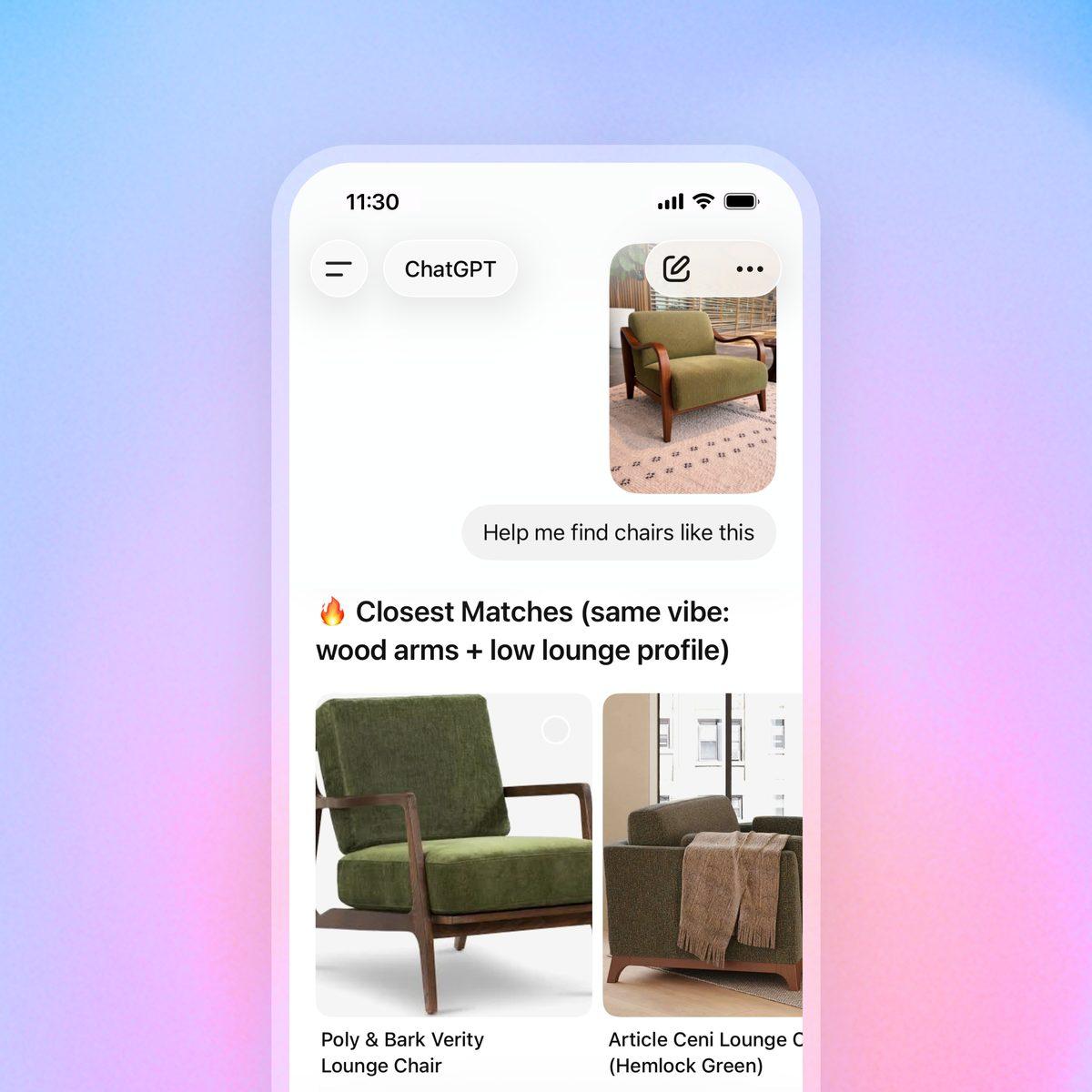
Official OpenAI visual: ChatGPT answers a product search by naming models and brands. Source: OpenAI.
The test:
- Note whether your store is cited, and where it shows up in the answer.
- Read how the answer describes you. The price, range, and strengths it gives should match your product pages.
- Write down who gets cited instead of you: brands, retailers, comparison sites, and the sources the answer links to. In our November 16, 2026 test in Google AI Mode (article in French), a question about a drill pointed to Castorama, Leroy Merlin, Amazon.fr, and the comparison site idealo.
- An answer changes from one day to the next, so ask the same question again the following week before you draw conclusions.
What makes you readable
To cite you, an assistant first has to be able to read your product pages. The next three tests check what its crawlers find there.
Test 2: can assistant crawlers reach your product pages?
At OpenAI, OAI-SearchBot powers search and GPTBot is used for training. For ChatGPT-User, which visits a page when a user asks, robots.txt rules “may not apply” (OpenAI, crawlers). Perplexity also separates PerplexityBot from Perplexity-User, which “generally ignores robots.txt rules” (Perplexity, crawlers). AI Mode and AI Overviews follow the rules written for Googlebot (Google Search Central).
Your firewall can block these crawlers even when robots.txt allows them. Google asks that crawling be allowed “by any CDN or hosting infrastructure”. OpenAI and Perplexity publish the IP addresses of their crawlers.
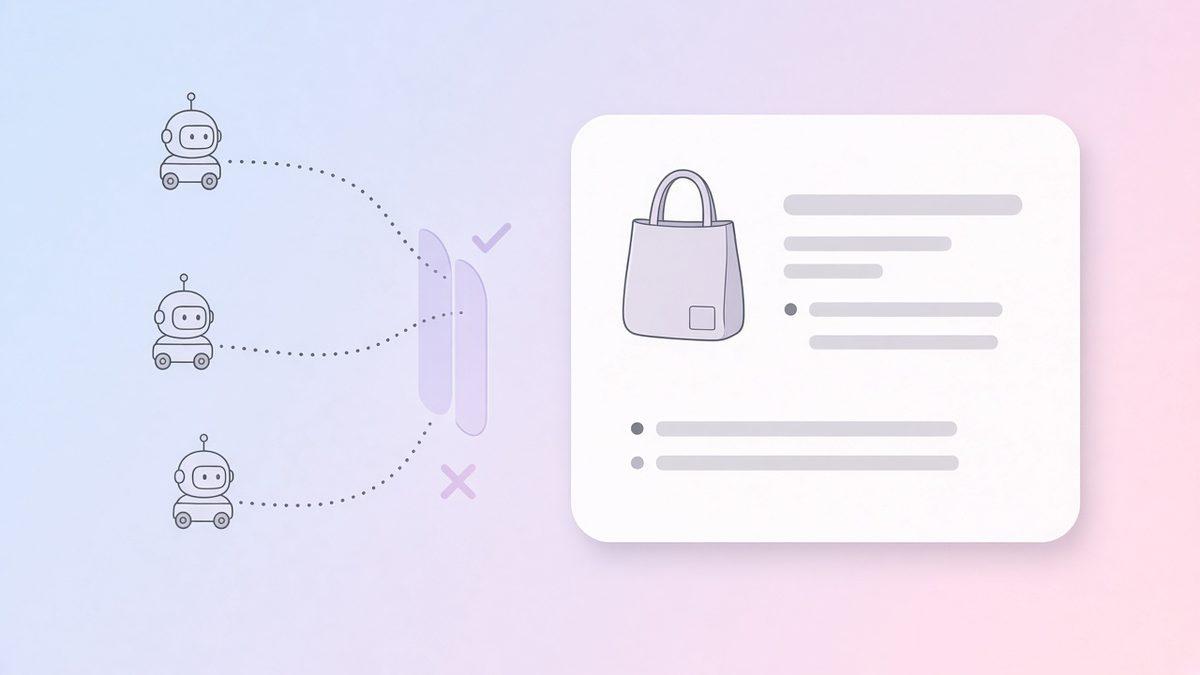
ResonanceMetrics illustration: depending on the site’s rules and its firewall, an AI crawler can reach the product page or get blocked.
The test:
- Open
yourstore.com/robots.txtand look forOAI-SearchBot,PerplexityBot, andGooglebot. Check that noDisallowcovers your product pages, including underUser-agent: *. - Ask your host or CDN whether these crawlers, along with
ChatGPT-UserandPerplexity-User, get 403 errors.
Test 3: is the price in the page’s source code?
Google runs JavaScript but recommends server-side rendering or pre-rendering, because “not all bots can run JavaScript” (Google, JavaScript SEO). According to Merchant Center Help, markup generated with JavaScript makes Shopping crawls “less frequent and less reliable”. Price, stock, and variant should not change after the page loads, which is when crawlers capture it. The product shown must be the same for all user agents, “including bots” (Merchant Center Help). Product structured data must match the visible text, as our article on Google AI Mode (in French) explains.
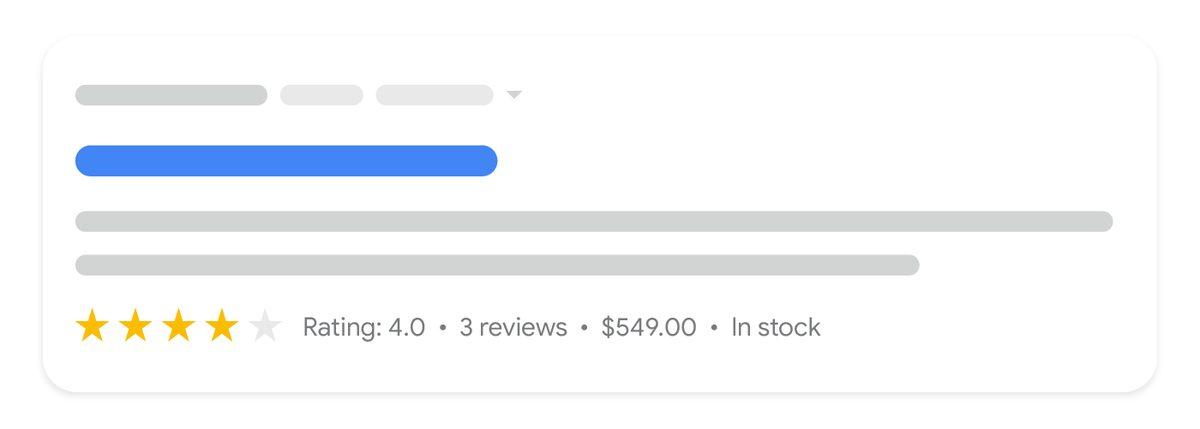
Official Google diagram: a search result enhanced by Product structured data, with the rating, price, and availability. Source: Google Search Central.
The test:
- On the product page, view the source code (Ctrl+U on a computer) and search for the price. The name, price, currency, and availability should be there before any JavaScript runs.
- Run the URL through Google’s Rich Results Test and compare the detected price with the one on the page, including for the selected variant.
Test 4: does your product feed say the same thing as your pages?
Google relies on Merchant Center, and providing both a feed and Product structured data “maximizes your eligibility”. At OpenAI, the feed specification asks for nine fields, from title to price, and standard upload still targets the United States (see our article on ChatGPT, in French).
On Shopify, every AI channel requires terms of service, a privacy policy, and a return policy filled in from the admin (Shopify Help).
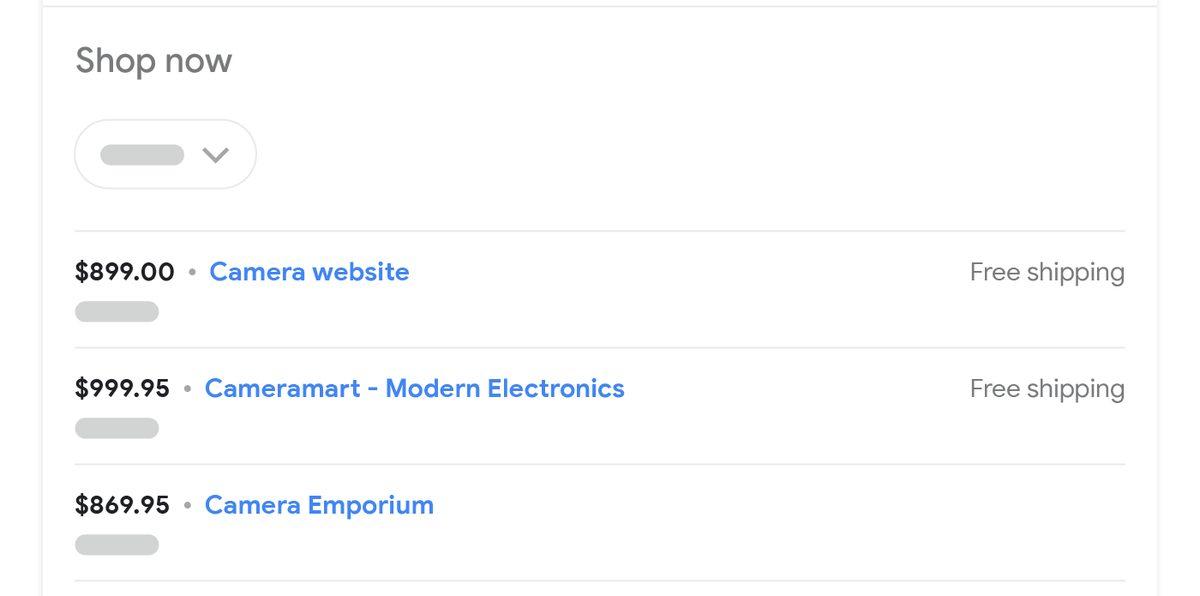
Official Google diagram: for the same product, Google shows each merchant’s price and shipping. Source: Google Search Central.
The test:
- For both product pages, compare price, stock, and shipping costs in Merchant Center and on the site.
- On Shopify, open Settings > Policies and check that all three policies are filled in.
The next step, once you are known
Once your store has been found and picked, the agent still has to be able to buy there.
Test 5: can an agent complete the order?
Meta asks its Muse connectors to accept guest checkout when it exists, and to show the total, taxes, and fees before the buyer approves. As a counterexample, Meta cites a price shown without mandatory fees that are added at payment (Meta, Muse connector rules). Google reads return conditions from MerchantReturnPolicy structured data or from Merchant Center. A checkout that fails sends Grok Bot to another store, according to its changelog.
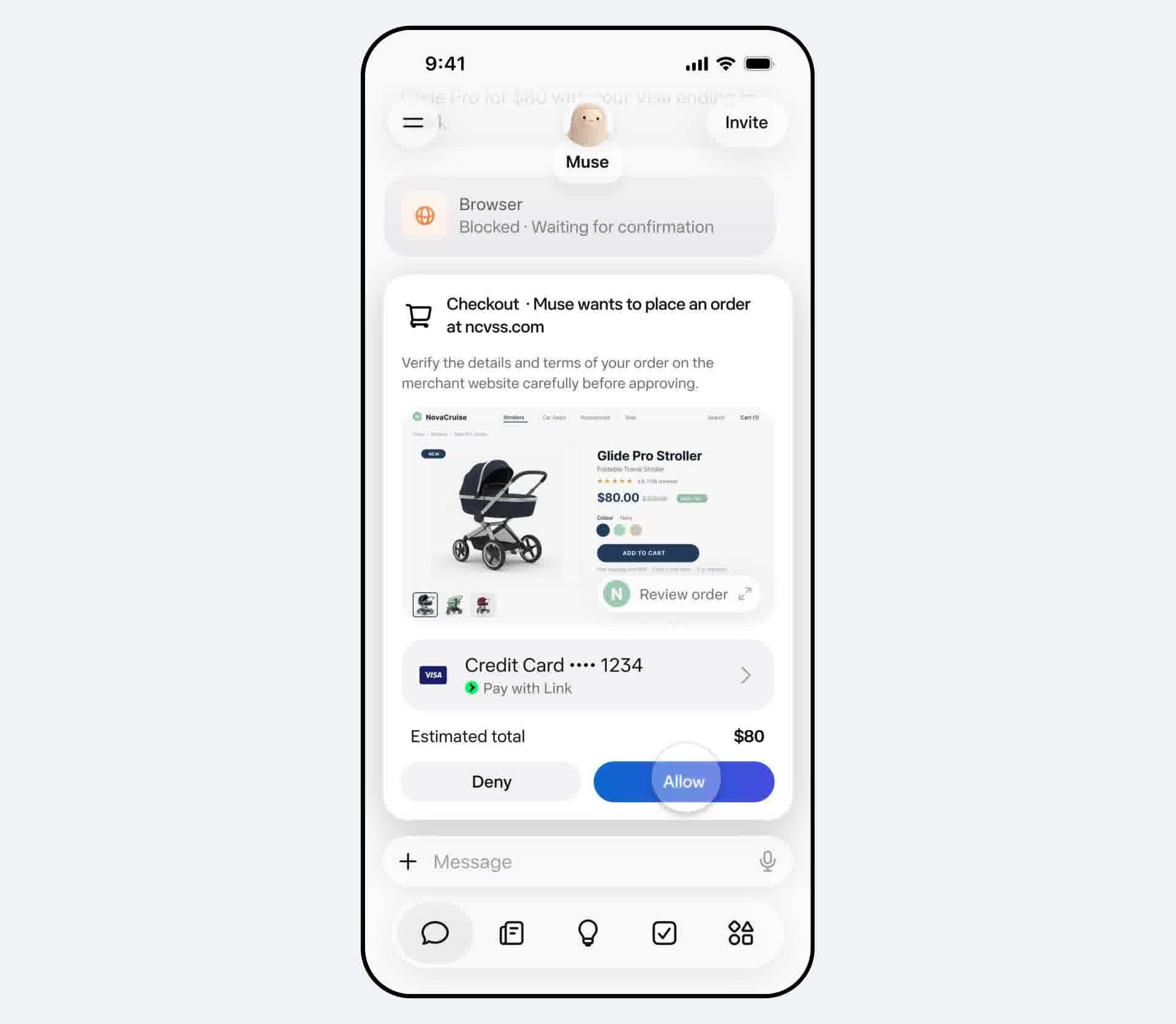
Official Meta visual: Muse asks the buyer for approval before ordering on the merchant’s site.
The test:
- In a private window, on mobile, go all the way to the payment screen without creating an account. Note every step that requires you to log in.
- Check that shipping costs appear before payment and that the returns page opens without logging in.
Measure your visibility in AI
Test 1 gives you one day’s answer, on two products. To track over time whether assistants cite your brand, ResonanceMetrics measures its visibility in five engines: ChatGPT, Claude, Gemini, Perplexity, and Google AI Overviews. The platform tracks how often the brand appears in answers, the sources cited, sentiment, and positioning, and how they change. ResonanceMetrics does not track Google AI Mode, Amazon’s or Meta’s assistants, or Grok Bot. The free plan, with no card required, covers 3 prompts a month in these five engines, with 30 days of history (pricing).
Two product pages that pass the tests tell you nothing about the others, or about what happens to these two after a theme change. The ResonanceMetrics APO (Agentic Product Optimization) module “audits every product URL on three axes—brand, purchase intent, AI exploitability”. It is available from the Core plan, at €179 per month excl. VAT, with 10 product pages included (APO pricing).
To find out whether assistants already cite your store, create a free account. To audit your product pages next, see APO pricing.
FAQ
Do AI agents need an llms.txt file?
Not for Google. For AI Mode and AI Overviews, Google requires neither a special AI file nor dedicated schema.org markup.
Does blocking GPTBot keep you out of ChatGPT?
No. GPTBot is used to train models. Showing up in ChatGPT search depends on OAI-SearchBot, and OpenAI states that the two settings are independent.
What is “ChatGPT Shop”?
Shopping in ChatGPT is “currently live for ChatGPT users in the U.S.” (OpenAI, merchants page). On Shopify, the ChatGPT channel requires selling to customers in the United States, even for a store based elsewhere. For a store that only sells in France, the five tests come first.
Can an AI agent buy from a French store?
No official source describes it from France yet. Muse and Grok Bot buy on the merchant’s site, but Muse is not available in France. In Europe, Meta has only launched it in the UK, on November 23, 2026 (Meta, November 23, 2026). For Grok Bot, X Money is limited to the United States, and Link single-use cards to the United States and Canada.
Sources
All consulted on November 23, 2026. Links re-checked on November 27, 2026.
Part of Agentic commerce in 2026: what you can buy in ChatGPT, Google, Perplexity, and Grok
Get your product pages ready for AI shopping agents
AI assistants rely on your product pages when they recommend a purchase. ResonanceMetrics APO audits each page and ranks the fixes by priority.