Local GEO: Google Brings Gemini into Google Maps
The integration of Gemini into Google Maps gives us a fresh example of how much local data matters to the visibility and authority of businesses inside AI search engines.

Antoine HeftlerCo-founder
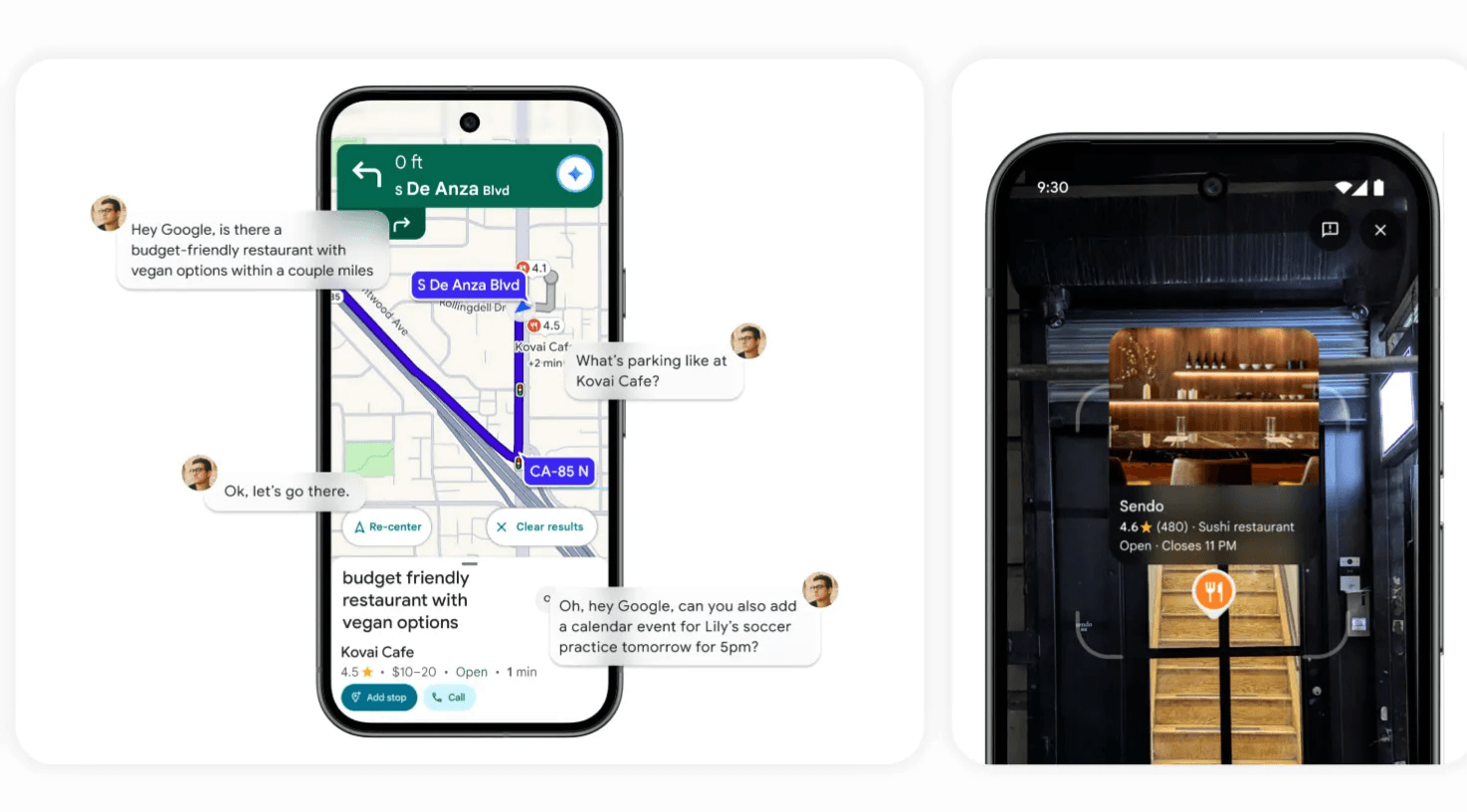
The integration of Gemini into Google Maps gives us a fresh example of how much local data matters to the visibility and authority of businesses inside AI search engines. ⤵️
🧑⚕️ The user is no longer looking for an address: they are describing a situation. And Gemini understands that situation — a quiet café for working, a safe place for a night walk, a hospital you can reach without getting stuck in traffic. In other words, AI no longer reads places. It reads hashtag#contexts.
🧠 With this shift, every landmark, combined with the content that describes it, becomes a source AI will use to build its answer to geolocated prompts.
🏢 For companies with a territorial foothold (or for which the local is a key element of positioning), this information now has to become a structural variable of marketing and communications content strategy.
- The consistency of local data (hours, photos, reviews, listings) becomes a lever of algorithmic credibility.
- The quality of the mesh between local content and territorial signals conditions whether you appear in AI answers.
💡 Only brands able to describe precisely where and how they exist will be recognized as legitimate by AI. In the short term on Google Maps, but probably soon on the other interfaces as well, such as GPT or Proximity.
👉 Worth reading alongside it, the article I wrote a few days earlier: "Local Anchoring, the Centrifugal Force of GEO"