Antoine Heftler and the TBWA Employer Brand Club
AI is transforming recruitment: why GEO is becoming essential for your employer brand

Antoine HeftlerCo-founder
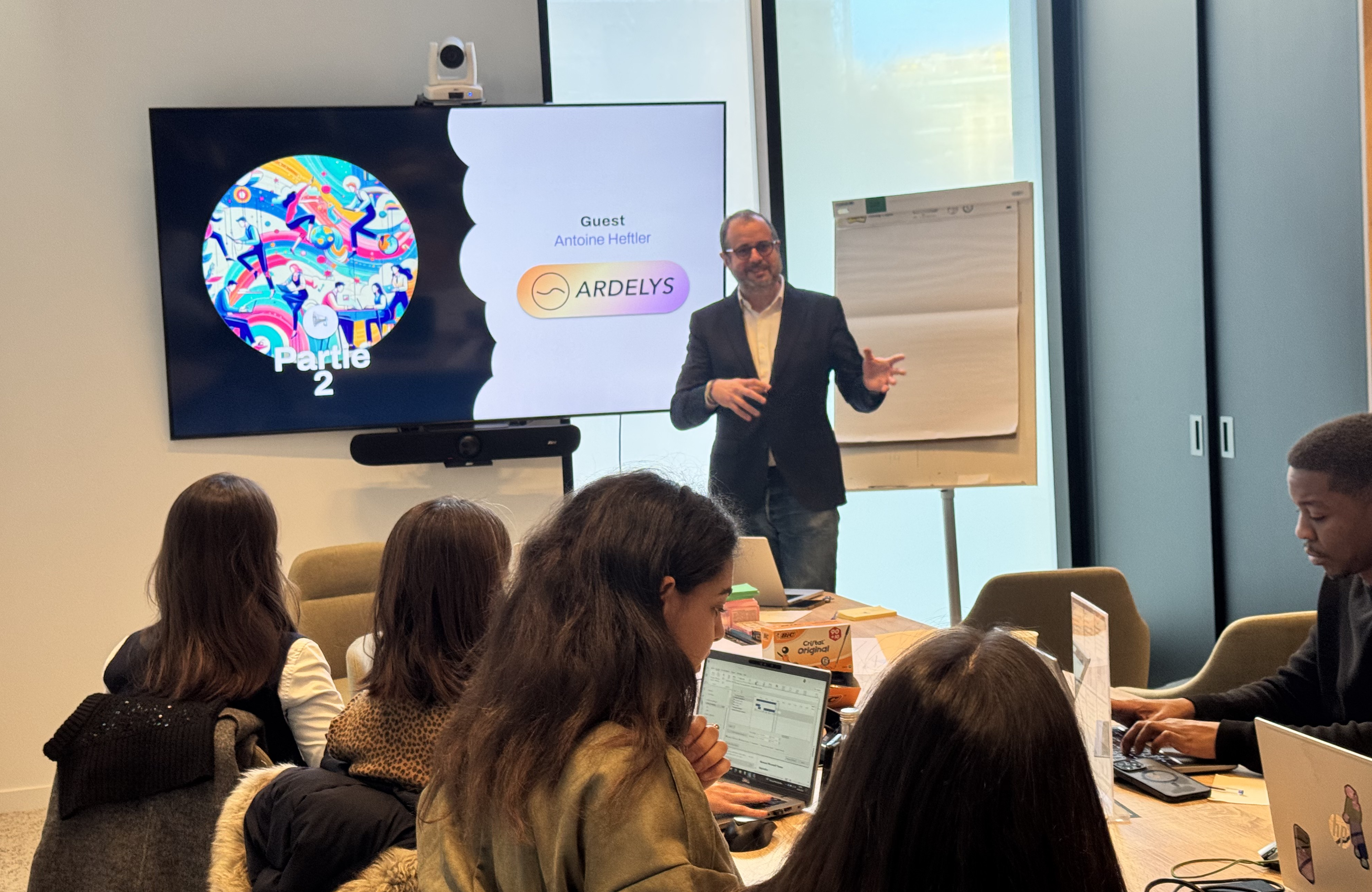
This morning I had the pleasure of speaking at the TBWA\Paris Employer Brand Club on a subject that is revolutionizing how we approach digital recruitment: GEO (Generative Engine Optimization). Thank you to Virgile Foucault and the whole team for the invitation and for these fascinating exchanges.
A radical paradigm shift
The numbers speak for themselves: 81% of searches by 18-to-25-year-olds now end without a single click (Semrush / SparkToro / BrightEdge, 2025). Even more striking, 83% of people under 25 include AI in their job-search strategy, and 77% of job seekers use it to optimize their searches.
We are witnessing a profound transformation in how candidates discover professional opportunities. AI does not merely answer queries. It becomes a conversational intermediary that synthesizes, recommends, and steers career decisions.
Understanding GEO: a new digital map
GEO represents a fundamental change in how we approach digital visibility. Where SEO rested on a logic that was lexical, segmented, and hierarchical, GEO introduces three major shifts:
From lexical to semantic: AI understands the intention behind the words, not only the keywords.
From segmented to intentional: yesterday people searched for "sales job in Rennes"; today they ask "I want to change careers, not far from home, and do what I love in a good environment".
From hierarchical to intermediated: AI becomes the new primary point of contact, synthesizing the information before the candidate even visits your site.
The new equation is simple: Prompts → Probabilistic algorithm ← Owned & earned sources → Answers. Your brand DNA has to become an algorithmic consensus that influences three critical dimensions: the visibility of your employer brand, the authority of your message, and the relevance of your offers in AI recommendations.
Three levers for steering your GEO
Lever #1: Map and target the sources AI uses
A surprising figure: 80% of the sources cited by AI sit past page 20 of Google (SemRush, 2025). In other words, AI does not merely pick up the top traditional search results. It explores in depth and gives weight to sources that classic SEO does not necessarily favor.
Your first challenge is therefore to identify which sources AI uses when it talks about your sector, your jobs, your company. That map becomes your new strategic chart for influencing AI's answers.
Lever #2: Make your content AI-compatible
The language has changed. Candidates no longer search for "senior Python developer Paris". They ask "what kind of tech company offers a good work-life balance for a senior developer who wants to keep learning?".
Your content has to bring in three dimensions:
- Context: who you are, your culture, your working environment
- Intent: the deep motivations of the candidates you are targeting
- Singularity: what truly sets you apart
This approach calls for close collaboration between marketing, communications, HR, and sales, so you can build a body of content that is aligned, singular, and usable by AI.
Lever #3: Optimize how exploitable your content is
Your site now has to speak to a meta-persona: AI itself. That implies three optimizations:
- Exploitable content: structured so language models can analyze it easily
- Actionable semantic density: information rich in context and in meaning
- Proof of singularity: distinctive elements that let AI tell you apart
The results are already measurable
GEO optimization is not theoretical. Academic data and field data confirm it:
Academic research (Princeton University, Georgia Tech, KDD 2024):
- +40% overall visibility on AI engines
- +132% citation rate with credible sources
Field data:
- +22% conversions after pages were restructured around intent and context (Dataiads, 2025)
- x3 on recommendations in the services sector (Parkour3, 2025)
Your concrete next steps
1. Turn intent into an acquisition strategy
Start by mapping your intentional perimeter: what are the real questions your target candidates are asking themselves? Define your DNA, your personas, and your semantic territory. Then analyze how AI currently talks about you: which sources does it cite? What message does it carry?
On that basis, build your optimization strategy by working at the same time on owned content (careers site, job pages) and earned content (presence in the media, employee reviews, third-party content).
2. Don't overlook qualitative KPIs
GEO introduces a new dimension of measurement. Alongside the traditional quantitative KPIs (Google position, sessions, views, CAC), add qualitative KPIs, which are becoming decisive:
- Visibility of your employer brand in AI answers
- Authority of your sources (are you cited? as a reliable source?)
- Semantic delta with AI: do the sentiment, the message, and the tone AI carries match your identity?
Tomorrow, hybrid KPIs will take hold: intent attribution rate, AI CAC, hiring journeys via AI, hires generated by AI.
3. Train, inform, and reassure your teams
GEO is not only a technical matter. It is a cultural change, and it means bringing your teams with you around three pillars:
- Culture: treating AI as an inescapable reality of modern recruitment
- Knowledge: understanding the technical mechanisms of GEO
- Curiosity: keeping an active watch on a field that is moving fast
The urgency of acting now
Why talk about it today? Because we are at a hinge moment. Paid advertising is already arriving on AI platforms in the United States (Q1/2026), with formats such as Perplexity's Sponsored Follow-up, OpenAI's GPT ads, and Google's Universal Commerce Protocol.
The employer brands that master GEO before this monetization will take a significant competitive advantage. Those that wait will have to make up the technical ground, and also pay for visibility they could have earned organically.
To conclude
GEO is not SEO 2.0. It is a discipline in its own right, and it asks us to rethink, at the root, our approach to digital visibility and to the employer brand. The organizations that succeed will be the ones that align their messages, optimize their presence in the sources AI uses, and adapt their content to conversational natural language.
The transformation is underway. Candidates are already using AI heavily in their job searches. The question is no longer whether you should start, but when and how.
This article comes out of my talk at the TBWA\Paris Employer Brand Club on February 4, 2026. To go further on these subjects, or to talk through your GEO strategy, do get in touch.